

Showing 1–12 of 25 results




Rugby Equipment in UAE for Training, Matches & Clubs
Get ready for every pass, sprint, kick, and training session with rugby equipment suited to your playing needs. Whether you're learning the fundamentals, preparing for a club match, or organising structured coaching sessions, choosing appropriate gear is an important part of rugby preparation.
Explore Rugby Equipment UAE at Fitnex, including rugby balls, training balls, tackle bags, hit shields, tag rugby belts, headguards, mouthguards, kicking tees, and passing-development accessories.
The collection features Dawson Sports rugby equipment for different age groups and training activities. From smaller rugby balls for developing players to senior tackle bags and coaching equipment, each product serves a particular purpose.
Selecting suitable rugby gear requires attention to ball size, construction, protective-equipment fit, intended use, and the experience of the players.
Compare the available products and choose equipment suited to your training programme, rugby club, school, or recreational activities.
Explore Our Range of Rugby Equipment
1. Rugby Balls for Training and Matches
A suitable rugby ball is essential for passing, catching, carrying, and kicking drills.
Rugby balls are designed with an oval shape and vary in dimensions, materials, grip characteristics, and intended use.
The right ball depends on the player's age group, training requirements, and applicable competition rules.
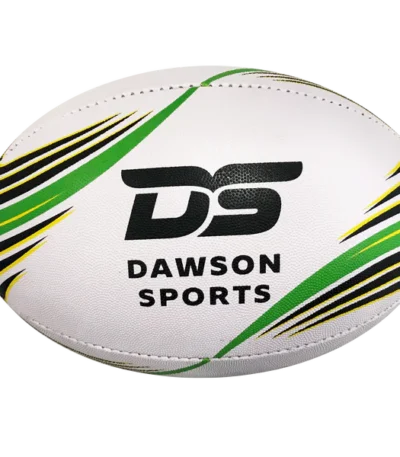
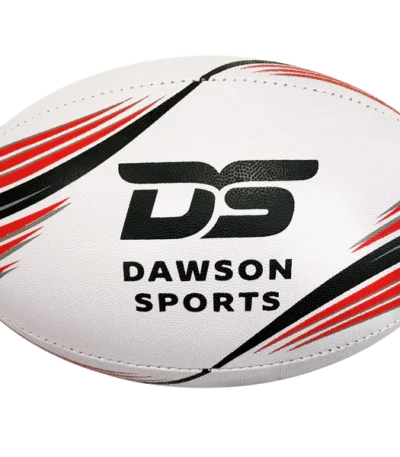
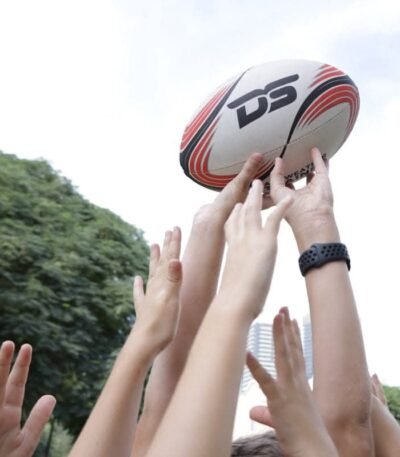
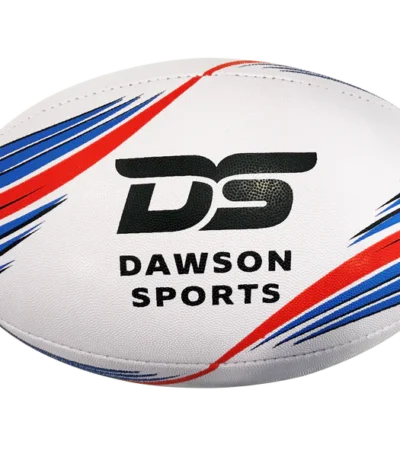
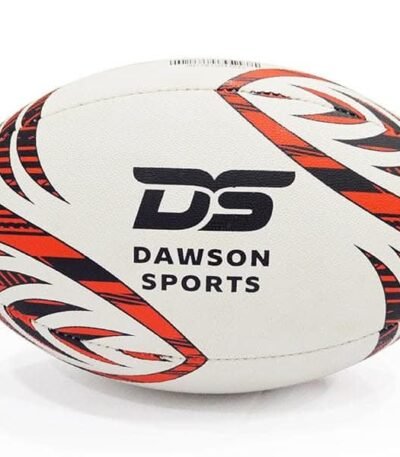
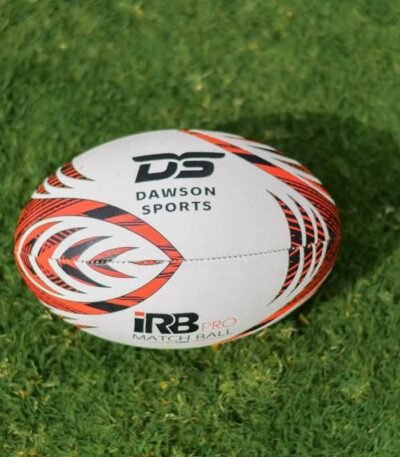
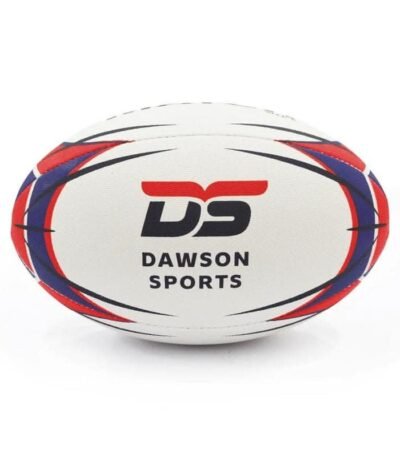
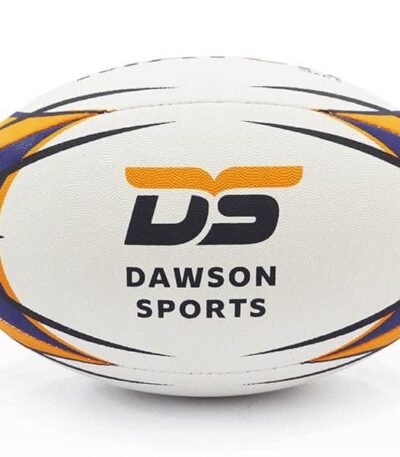
The Fitnex Rugby category includes Dawson Sports training and match balls in several sizes.
When selecting rugby balls, check the manufacturer's recommendations, construction, inflation instructions, and suitability for your playing conditions.
2. All-Weather Rugby Training Balls
Training balls are intended for repeated practice activities, including passing, catching, and basic ball-handling drills.
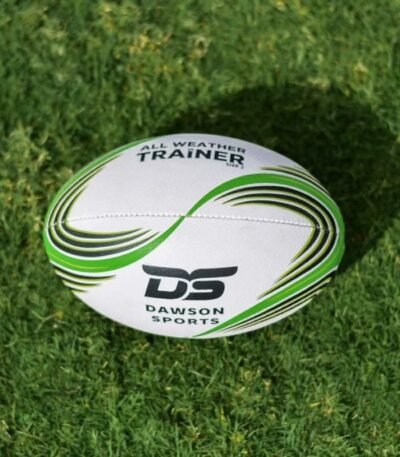
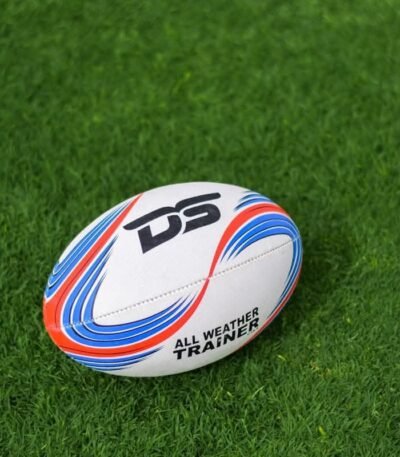
The collection includes DS All Weather Trainer Rugby Balls – Size 3, with Size 4 and Size 5 options also listed.
These different sizes allow coaches to select balls appropriate for different player groups.
An all-weather designation can indicate that a product is intended for use in varied playing conditions. However, actual grip and durability still depend on the ball's materials and maintenance.
For regular training, inspect the ball's surface, seams, and inflation before use.
3. Match Rugby Balls
Match rugby balls are selected for structured games and match-specific practice.
They may differ from general training balls in their construction, surface characteristics, and intended performance.
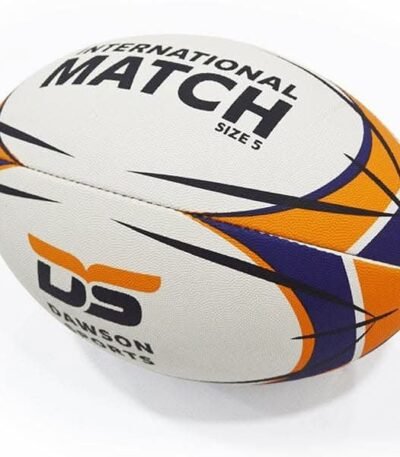
Fitnex lists the DS GUK Match Rugby Ball – Size 5, along with Dawson Sports International Match Rugby Balls in Sizes 4 and 5.
Before purchasing a match ball, confirm whether its size and specifications meet the requirements of the relevant league or competition.
A product labelled as a match ball should not automatically be assumed to carry a particular governing-body certification.
4. Mini Rugby Balls for Junior Activities
Mini rugby balls can be useful for introductory activities and recreational play.
Smaller ball dimensions may make catching and handling more manageable for young or developing players.
The Fitnex collection includes DS Mini Rugby Balls in Sizes 1 and 2.
These products can be considered for suitable beginner activities, ball familiarisation, and age-appropriate recreational games.
However, size selection should follow the training programme's guidance. Mini balls are not automatically substitutes for regulation match balls.
5. Beach Rugby Balls
Beach rugby is a variation of rugby played in suitable sandy environments.
Equipment used for beach activities may have different practical requirements from rugby played on grass or artificial turf.
The category includes the DS Pro Beach Rugby Ball – Size 5.
When choosing a beach rugby ball, verify its intended use and follow the manufacturer's instructions.
Consider the playing environment, surface temperature, and suitable conditions for participants.
Rugby Training Equipment for Clubs and Academies
6. Rugby Tackle Bags
Tackle bags are used during structured rugby coaching activities to practise selected contact and tackling techniques.
The Fitnex collection includes junior, youth, and senior tackle bag options.
Examples include the DS Tackle Bag – Junior 120 × 35 cm and the DS Tackle Bag – Senior 180 × 45 cm.
Different sizes allow coaches to select equipment appropriate for particular drills and participant groups.
When purchasing tackle bags, review their dimensions, construction, handles, covering materials, and manufacturer's intended use.
Important: Contact training should only be conducted with qualified supervision and appropriate progression. Tackle bags do not remove the risk of concussion, neck injury, or other injuries.
7. Rugby Curved Hit Shields
Curved hit shields are coaching pads designed for controlled contact drills.
Their shape and padding allow a trained coach or partner to present a designated contact target during suitable exercises.
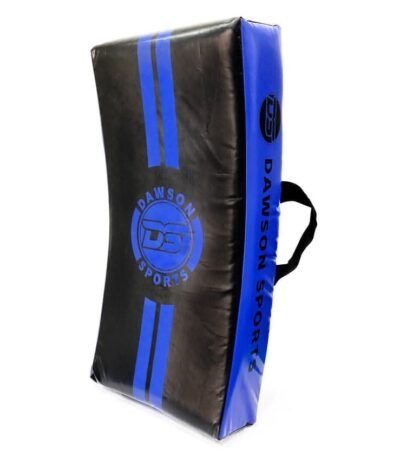
Fitnex lists the DS Curved Hit Shield – Large and a smaller version.
The product description identifies a water-resistant PVC cover, high-density foam padding, and two handles.
When comparing hit shields, consider their dimensions, overall weight, padding, handle position, and intended training intensity.
Proper coaching technique is important for both the person using the shield and the participant performing the drill.
8. Flag Tag Rugby Belts
Tag rugby is a non-contact form of rugby in which players remove tags from an opponent's belt instead of performing conventional tackles.
Tag belts are commonly used in school activities, beginner programmes, and selected recreational games.
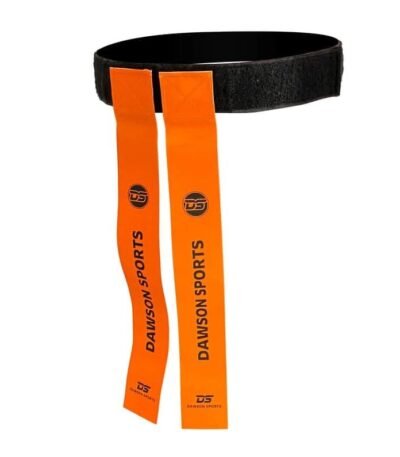
The collection includes DS Flag Tag Belts with Two Tags in blue, red, orange, and light green options.
Different colours can help coaches organise teams or training groups.
Before purchasing, check belt fit, tag attachment design, and the intended age group.
Tag rugby can reduce the need for tackling, but players still require suitable supervision and a safe playing environment.
9. Rugby Passing Development Equipment
Passing is one of rugby's fundamental skills.
Players need to develop ball control, coordination, and accurate passing under suitable training conditions.
Fitnex includes the DS Rugby Pass Developer in its Rugby category.
Passing-development accessories may support structured drills, depending on their design and the manufacturer's instructions.
Coaches can combine suitable equipment with passing exercises that progress from stationary practice to controlled movement.
The product should be used for its specified purpose rather than assuming it supports every type of rugby drill.
10. Rugby Kicking Tees
A rugby kicking tee supports the ball during certain kicking activities.
Its design can influence how the ball is positioned before a kick.
The collection includes the DS Rugby Kicking Tee.
When selecting a kicking tee, consider its shape, stability, material, and compatibility with the ball size being used.
Players may have different preferences for ball position and tee height.
A suitable kicking tee can help provide a repeatable setup during supervised kicking practice.
Rugby Protective Equipment
11. Rugby Mouthguards
Mouthguards are commonly used during rugby activities to help reduce certain dental and oral injuries.
The Fitnex collection includes DS Mouthguard Junior and a senior version.
Choosing a mouthguard requires careful attention to sizing, fit, and the manufacturer's fitting instructions.
An improperly fitted mouthguard may be uncomfortable or ineffective.
For junior players, parents and coaches should ensure that the product is age-appropriate.
A mouthguard does not prevent concussions or eliminate the risks of contact sports.
12. Rugby Headguards
Rugby headguards, sometimes called scrum caps, are designed for particular forms of superficial head and ear protection during approved activities.
Fitnex lists Dawson Sports PRO Headguards in junior, youth, and senior versions.
An example is the DS PRO Headguard – Junior.
When selecting a headguard, check its fit, construction, fastening system, and compatibility with the rules of the rugby activity.
Headguards do not prevent concussion or make head impacts safe. Appropriate training, controlled contact, and injury management remain essential.
Rugby Equipment Comparison Guide
| Equipment Type | Main Purpose | Important Buying Factors |
|---|---|---|
| Training Rugby Balls | Passing, catching, general drills | Size, grip, construction |
| Match Rugby Balls | Matches and match preparation | Size, competition rules |
| Mini Rugby Balls | Junior and introductory activities | Dimensions, age suitability |
| Tag Rugby Belts | Non-contact tag rugby | Fit, tags, attachment |
| Tackle Bags | Supervised contact drills | Dimensions, padding, stability |
| Curved Hit Shields | Coach-led contact exercises | Handles, weight, padding |
| Rugby Kicking Tees | Kicking practice | Height, stability, compatibility |
| Rugby Headguards | Certain superficial head and ear protection | Size, fit, regulations |
| Rugby Mouthguards | Dental and oral injury protection | Fit, age suitability |
| Passing Developers | Selected passing drills | Design, intended exercises |
Rugby equipment should be selected according to the specific activity and player group rather than assuming every product is suitable for all rugby training sessions.
How to Choose the Right Rugby Equipment in UAE
1. Identify the Player's Age and Experience
Begin by considering whether the equipment is intended for junior players, beginners, recreational participants, or experienced club athletes.
Younger players may need appropriately sized rugby balls and introductory training equipment.
More experienced groups may require match balls, coaching pads, and specialised equipment for their training programmes.
Always follow the relevant sport governing body's age-group guidance.
2. Choose the Correct Rugby Ball Size
Different rugby ball sizes are used for different playing groups.
| Rugby Ball Size | Typical Use |
|---|---|
| Size 1–2 | Mini rugby balls and introductory activities |
| Size 3 | Commonly used for younger junior players |
| Size 4 | Often used in older junior and youth categories |
| Size 5 | Standard adult rugby ball size |
Exact requirements vary across competitions and organisations. Confirm the correct size before ordering equipment for a school or club.
3. Compare Training and Match Rugby Balls
Training balls are often chosen for repeated practice sessions, while match balls are intended for match-related use.
Compare their published materials, grip, construction, and size.
For outdoor training, check the manufacturer's recommendations for the expected playing conditions.
4. Select Appropriate Contact Training Equipment
Tackle bags and hit shields are intended for different coaching drills.
Consider the dimensions and weight of the equipment, the participants' abilities, and the training objectives.
Contact activities should be supervised by appropriately qualified coaches and introduced progressively.
5. Check Protective Equipment Fit
Mouthguards and headguards should fit the individual player correctly.
Select the appropriate size and follow the manufacturer's fitting instructions.
Inspect protective products for damage before use.
Neither item makes rugby contact risk-free.
6. Consider Tag Rugby for Introductory Sessions
Tag rugby belts can be useful for suitable non-contact activities.
They allow coaches to introduce movement, teamwork, passing, and positioning without conventional tackling.
When purchasing tag belts for a group, consider the number of participants and whether different tag colours would help organise teams.
7. Review Durability and Maintenance
Regularly used rugby equipment should be inspected for worn materials, damaged padding, loose straps, and other issues.
Choose products appropriate for their intended training frequency.
Follow the manufacturer's cleaning and storage instructions.
8. Compare Product Specifications and Current Prices
Before buying rugby equipment online, check dimensions, ball size, construction, intended use, and package quantity.
For protective equipment, verify sizing and applicable regulations.
For coaching products, make sure the dimensions and construction match the planned drills.
Rugby Equipment for Schools, Clubs & Academies in UAE
Rugby Equipment for Schools
Schools may require appropriately sized rugby balls, tag belts, and selected introductory training accessories.
Equipment should suit the students' age groups and the activities being taught.
Tag rugby can provide a structured way to introduce basic gameplay without conventional tackling.
Rugby Training Equipment for Clubs
Rugby clubs may need training and match balls, tackle bags, hit shields, kicking tees, and other coaching accessories.
When purchasing equipment for regular sessions, consider the number of players, expected usage, and storage facilities.
Inspect all contact-training equipment before each session.
Rugby Gear for Training Academies
Coaching academies may work with several age groups and skill levels.
Maintaining different ball sizes and appropriately selected training aids can help coaches organise progressive sessions.
Contact drills require suitable supervision and should follow the relevant sporting organisation's safety guidance.
Rugby Equipment in Dubai, Abu Dhabi & Sharjah
Schools and rugby clubs across Dubai, Abu Dhabi, Sharjah, and the wider UAE can compare equipment according to their programmes and playing conditions.
Outdoor training should be planned around weather conditions, particularly periods of extreme heat.
Store rugby balls, padding, and protective equipment away from prolonged direct sunlight and excessive temperatures.
Rugby Equipment Prices in UAE
Rugby equipment prices in UAE vary according to product type, size, construction, and intended use.
The following prices were displayed in the Fitnex category during this review:
| Rugby Product | Listed Price |
|---|---|
| DS All Weather Trainer Ball – Size 3 | AED 72 |
| DS All Weather Trainer Ball – Size 5 | AED 81 |
| DS GUK Match Rugby Ball – Size 5 | AED 100 |
| DS Mini Rugby Ball – Size 1 | AED 37 |
| DS Flag Tag Belt – Blue | AED 25 |
| DS Rugby Kicking Tee | AED 23 |
| DS Mouthguard Junior | AED 32 |
| DS PRO Headguard Junior | AED 125 |
| DS Curved Hit Shield – Large | AED 640 |
| DS Tackle Bag – Junior | AED 845 |
| DS Tackle Bag – Senior | AED 1,440 |
Prices observed on November 25, 2026. Some reflect displayed discounts and may change. Check current product listings before publishing.
When comparing prices, consider product dimensions, age suitability, training frequency, and whether equipment is supplied individually or as a set.
Rugby Equipment Maintenance & Care
Rugby Ball Maintenance
Clean rugby balls using manufacturer-approved methods.
Inspect the outer surface, seams, and inflation before playing.
Avoid overinflating balls and follow the product's recommended pressure range.
Tackle Bag and Hit Shield Care
Inspect the exterior covering, seams, handles, and padding.
Clean according to the manufacturer's instructions and allow equipment to dry appropriately.
Stop using any bag or shield with damage that affects its intended function.
Mouthguard and Headguard Maintenance
Clean mouthguards according to their product instructions and store them in suitable ventilated containers.
Inspect rugby headguards for worn padding, damaged fasteners, or an improper fit.
Replace protective equipment when necessary.
Storage in UAE Conditions
Store equipment in a dry, ventilated location away from extreme heat.
Avoid leaving rugby balls or padded equipment in direct sunlight for prolonged periods.
Keep training accessories organised to reduce wear and accidental damage.
Frequently Asked Questions About Rugby Equipment
1. What rugby equipment is available at Fitnex UAE?
Fitnex offers rugby training and match balls, mini rugby balls, tag rugby belts, tackle bags, curved hit shields, mouthguards, headguards, kicking tees, and passing-development equipment.
2. What rugby ball size is suitable for beginners?
The correct size depends on the player's age, hand size, and training requirements. Sizes 3 and 4 are commonly used in junior rugby, while Size 5 is the standard adult size. Check the applicable age-group rules.
3. What is the difference between rugby training balls and match balls?
Training balls are generally selected for regular practice, while match balls are intended for match play. They may differ in construction, grip, and intended performance. Compare the individual specifications before buying.
4. How much does rugby equipment cost in UAE?
Rugby equipment prices in UAE depend on the product type, dimensions, construction, and intended use. Check current Fitnex listings for accurate prices in AED.
5. What are rugby tackle bags used for?
Rugby tackle bags are used in supervised coaching drills to practise selected contact techniques. The equipment must match the participants' abilities and be used under qualified supervision.
6. Are tag rugby belts suitable for school training?
Yes. Tag rugby belts can be suitable for age-appropriate non-contact rugby activities in schools. Check belt fit, tag attachment, and the programme's supervision requirements.
7. What is the difference between junior and senior rugby headguards?
Junior and senior headguards generally differ in sizing and fit. Select a model that fits correctly and meets applicable rules. Rugby headguards do not prevent concussions.
8. Why are mouthguards important in rugby?
Mouthguards help reduce the risk of certain dental and oral injuries during appropriate rugby activities. They must fit correctly and be used according to the manufacturer's instructions.
9. What is a rugby kicking tee used for?
A rugby kicking tee supports the ball during selected kicking activities. Players can choose a suitable design according to their kicking technique, ball size, and preference.
10. How should I maintain and store rugby equipment?
Clean rugby balls and training equipment using manufacturer-approved methods, inspect padding and protective accessories for damage, and store everything away from excessive heat, moisture, and prolonged direct sunlight.
Buy Rugby Equipment Online in UAE
Prepare for your next rugby training session with equipment suited to your team's needs.
Whether you're purchasing rugby balls for school activities, tag belts for introductory games, or tackle bags and hit shields for structured club training, selecting appropriate products supports better preparation.
Explore Rugby Equipment UAE at Fitnex, compare Dawson Sports products, review available sizes and specifications, and choose gear for your next training session or match.


